
Apple Cider Cheesecake with Cinnamon-Glazed Apples

This apple cider cheesecake brings together everything wonderful about fall desserts: warm cinnamon, sweet-tart apples, a buttery spiced cookie crust, and an incredibly creamy cheesecake filling. Made with concentrated apple cider and finished with tender cinnamon-glazed apples, it’s a beautiful homemade dessert for Thanksgiving, holiday gatherings, or a cozy autumn weekend.
The secret to a flavorful cheesecake is reducing the apple cider before adding it to the filling. This simple step concentrates the apple flavor without adding too much liquid, keeping the cheesecake rich and creamy.
And the finishing touch? A generous spoonful of glossy, cinnamon-coated apples that makes every slice look just as inviting as it tastes.
Why You’ll Love This Apple Cider Cheesecake
- Real apple cider flavor: Reduced apple cider adds concentrated apple flavor throughout the creamy filling.
- Warm fall spices: Cinnamon and a touch of nutmeg complement the apple flavor without overpowering it.
- Buttery gingersnap crust: Spiced cookies give the cheesecake a deliciously crunchy base.
- Beautiful apple topping: Soft cinnamon-glazed apples add texture, flavor, and an eye-catching finishing touch.
- Perfect for making ahead: This cheesecake needs time to chill, making it a convenient dessert to prepare before a gathering.
What Makes This Apple Cider Cheesecake Special?
Unlike a traditional cheesecake that relies primarily on vanilla and cream cheese, this version has apple cider infused directly into the filling.
Fresh apple cider contains a lot of water, so adding it straight from the jug can dilute the flavor and affect the consistency. Simmering it until it becomes a concentrated reduction helps deliver a more pronounced apple taste.
The cheesecake itself is smooth, lightly tangy, and gently spiced. A crisp gingersnap crust balances the creamy texture, while the cinnamon-glazed apple topping adds a second layer of apple flavor.
The result is a dessert that combines classic cheesecake richness with the comforting flavors of autumn.
Ingredients You’ll Need
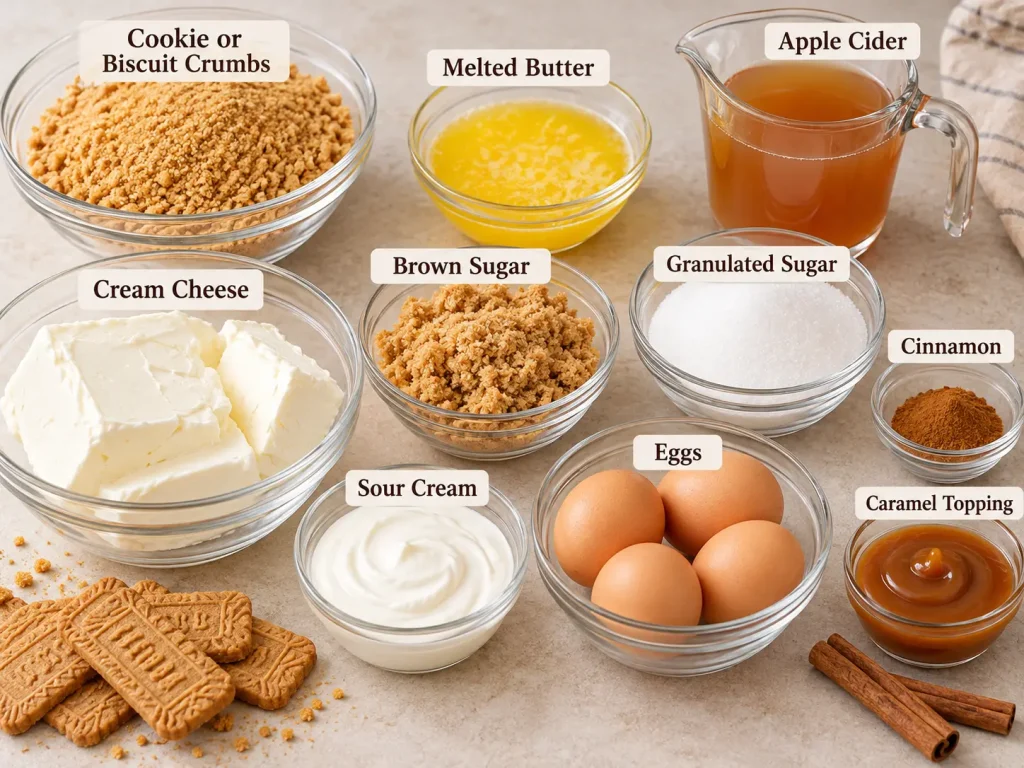
This recipe uses simple baking ingredients, plus fresh apple cider and apples for its signature fall flavor.
For the Apple Cider Reduction
- 3 cups (720 ml) pasteurized, unfiltered apple cider
This will be reduced to approximately 1/2 cup (120 ml). Part goes into the cheesecake filling, and the remainder flavors the apple topping.
For the Gingersnap Crust
- 2 cups (about 220 g) finely crushed gingersnap cookies
- 6 tablespoons (85 g) unsalted butter, melted
- 1/8 teaspoon fine salt
For the Cheesecake Filling
- 24 ounces (680 g) full-fat block cream cheese, softened
- 3/4 cup (150 g) packed light brown sugar
- 3/4 cup (180 g) full-fat sour cream, room temperature
- 1/3 cup (80 ml) cooled apple cider reduction
- 3 large eggs, room temperature
- 1 teaspoon pure vanilla extract
- 1 teaspoon ground cinnamon
- 1/4 teaspoon ground nutmeg
- 1/4 teaspoon fine salt
- 1 tablespoon (8 g) cornstarch
For the Cinnamon-Glazed Apple Topping
- 2 medium apples, peeled, cored, and diced
- 1 tablespoon (14 g) unsalted butter
- 2 tablespoons (25 g) packed light brown sugar
- 1/2 teaspoon ground cinnamon
- 1 tablespoon water
- Remaining apple cider reduction (approximately 2 tablespoons plus 2 teaspoons)
- 1 teaspoon fresh lemon juice
Ingredient Notes and Substitutions
Apple cider: Choose fresh-style, nonalcoholic apple cider, preferably unfiltered. Do not substitute apple cider vinegar or alcoholic hard cider. Regular apple juice can work, but the finished flavor may be milder.
Cream cheese: Full-fat block cream cheese gives the filling its rich texture. Avoid whipped cream cheese or cream cheese spreads, as their moisture content and consistency can differ.
Brown sugar: Light brown sugar adds gentle molasses notes that complement the cider. Dark brown sugar can also be used for a more pronounced caramel-like flavor.
Sour cream: This balances the sweetness and helps create a smooth filling. Full-fat plain Greek yogurt is a possible substitute, although the texture and tang may change.
Ginger snap cookies: These add extra fall spice to the crust. Graham crackers are a good alternative; add 1/2 teaspoon cinnamon to the crumbs if you want a similar warming flavor.
Apples: Honeycrisp and Granny Smith are both good options. Honeycrisp brings sweetness, while Granny Smith creates a tangier contrast to the rich cheesecake.
How to Make Apple Cider Cheesecake
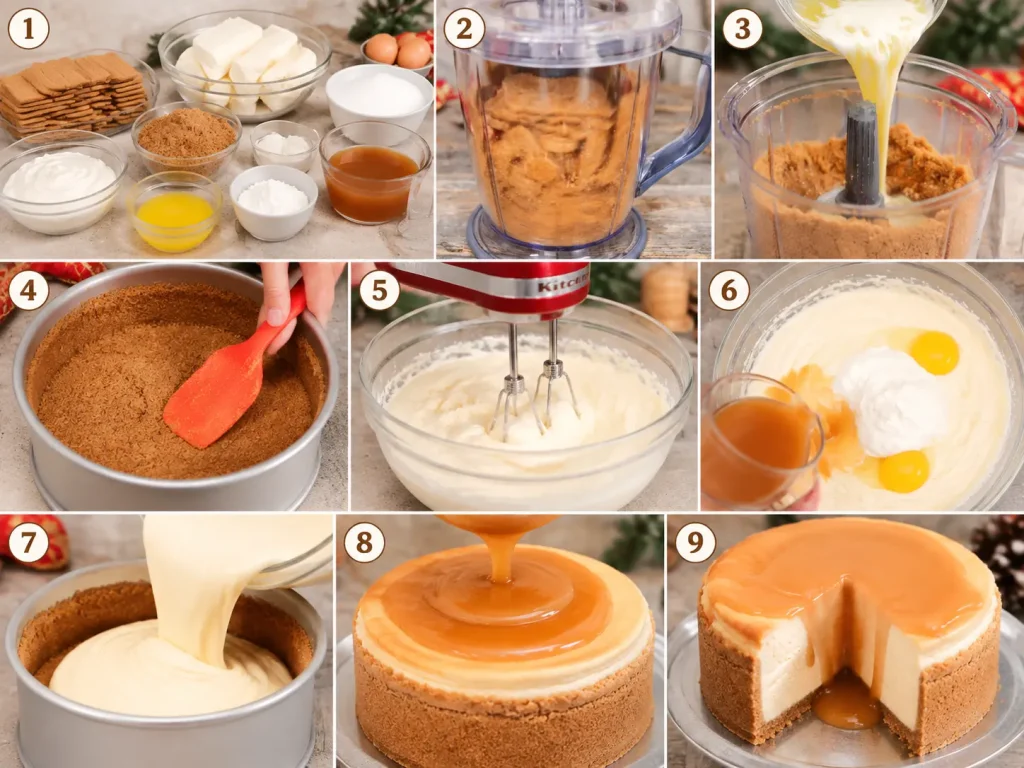
Follow these steps for a smooth filling, an evenly baked crust, and a beautifully finished dessert.
Step 1: Reduce the Apple Cider
Pour 3 cups of apple cider into a wide, heavy-bottomed saucepan.
Bring it to a boil over medium-high heat, then maintain a steady simmer, stirring occasionally.
Cook for approximately 30–50 minutes, or until the cider has reduced to 1/2 cup. The exact time depends on your pan, heat level, and the cider itself.
The liquid should look darker and more concentrated, but it should still be pourable.
Measure the reduction and let it cool completely.
Important: Reserve 1/3 cup for the filling and keep the remainder for the apple topping. Don’t add hot cider reduction to the cheesecake batter.
Step 2: Prepare the Gingersnap Crust
Preheat your oven to 350°F (175°C).
Lightly grease a 9-inch springform pan and line its bottom with parchment paper.
Crush the gingersnap cookies into fine crumbs using a food processor or a sealed bag and rolling pin.
Combine the crumbs, melted butter, and salt in a mixing bowl. Stir until the mixture resembles evenly moistened sand.
Firmly press the mixture across the bottom of the prepared pan and about 1 inch up the sides.
Bake for 10 minutes, then remove and let cool while preparing the filling.
Reduce the oven temperature to 325°F (163°C).
Step 3: Make the Cheesecake Filling
Place the softened cream cheese in a large mixing bowl.
Using an electric mixer on medium-low speed, beat until smooth and free of noticeable lumps.
Combine the brown sugar and cornstarch, then gradually beat them into the cream cheese. Scrape down the bowl as needed.
Add the sour cream, cooled apple cider reduction, vanilla, cinnamon, nutmeg, and salt.
Mix on low speed until everything is evenly incorporated.
Add the eggs one at a time, mixing briefly on low speed after each addition.
Stop mixing as soon as the last egg disappears into the batter.
Baking tip: Overmixing after adding the eggs can introduce excess air, which increases the likelihood of the cheesecake puffing up and cracking.
Step 4: Prepare the Water Bath
A water bath helps the cheesecake bake gently and evenly.
Place the springform pan inside a slightly larger, watertight cake pan, if available. Then place both inside a deep roasting pan.
If you don’t have a larger cake pan, tightly wrap the outside of the springform pan with several layers of heavy-duty aluminum foil to reduce the risk of leaking.
Pour the cheesecake filling over the prepared crust and smooth the surface.
Place the roasting pan in the oven. Carefully pour hot water into it until the water reaches about 1 inch up the outside of the cheesecake pan or its protective outer pan.
Avoid getting water into the cheesecake.
Step 5: Bake Until Creamy and Just Set
Bake at 325°F (163°C) for approximately 70–85 minutes.
The cheesecake is ready when the outer edges appear set but the center still has a gentle wobble when you carefully nudge the pan.
For a precision check, the center should be around 150–155°F (65–68°C), with carryover heat continuing the cooking process.
Do not wait for the entire surface to become completely firm, as this can lead to overbaking.
Step 6: Cool and Chill
Turn off the oven and crack the door slightly.
Let the cheesecake cool inside the turned-off oven for approximately 45 minutes.
Carefully remove it from the water bath and transfer it to a wire rack. Allow it to cool for another 45–60 minutes, until no longer warm.
Refrigerate promptly once cooled. Cover and chill for at least 6 hours, preferably overnight.
This chilling period allows the cheesecake to become firm enough for clean, beautiful slices.
Step 7: Make the Cinnamon-Glazed Apples
Peel, core, and dice the apples into small, evenly sized pieces.
Melt the butter in a medium skillet over medium heat.
Add the diced apples, brown sugar, cinnamon, and water.
Cook for approximately 6–8 minutes, stirring occasionally, until the apples are tender but still hold their shape.
Stir in the reserved apple cider reduction and lemon juice. Cook briefly until the apples are coated in a glossy glaze.
Remove from the heat and allow the topping to cool completely.
Step 8: Assemble and Serve
Once the cheesecake is fully chilled, carefully release it from the springform pan and transfer it to a serving plate.
Spoon the cooled cinnamon-glazed apples over the center, leaving a little of the creamy cheesecake visible around the edges.
For clean slices, dip a sharp knife into hot water and wipe it dry between cuts.
Serve chilled and enjoy the combination of creamy cheesecake, spiced cookie crust, and tender cider-glazed apples.
Expert Tips for the Best Apple Cider Cheesecake
Use Room-Temperature Ingredients
Cold cream cheese is more likely to leave lumps in the batter. Let the cream cheese, sour cream, and eggs lose their refrigerator chill before mixing.
Measure the Cider Reduction
The final volume matters more than the exact simmering time. Aim for 1/2 cup of concentrated cider rather than guessing based on appearance alone.
Don’t Overbeat the Eggs
Once the eggs are added, mix gently and stop when the batter is combined. Excess air can contribute to an uneven surface and cracks.
Avoid Overbaking
The cheesecake should still wobble slightly in the middle. It will continue to set as it cools and chills.
Add the Apple Topping Before Serving
For the freshest texture and neatest presentation, store the topping separately and spoon it over the cheesecake shortly before serving.
Common Cheesecake Problems and How to Fix Them
The cheesecake cracked: Overbaking, too much air in the filling, or sudden temperature changes may be responsible. Next time, mix the eggs gently, check for doneness earlier, and cool the cheesecake gradually.
The center is too soft: The cheesecake may need more baking time or additional chilling. A properly baked cheesecake will firm up considerably after several hours in the refrigerator.
The crust became soggy: Water may have entered the springform pan during baking. Using a watertight outer pan is one of the most effective ways to protect the crust.
The filling has lumps: The cream cheese was likely too cold or not adequately smoothed before the remaining ingredients were added.
The apple flavor is too mild: The cider may not have been reduced enough, or the original cider may have had a delicate flavor. Use a flavorful, unfiltered cider and measure the reduction carefully.
Delicious Recipe Variations
Caramel Apple Cider Cheesecake: Drizzle a little salted caramel sauce over the apple topping immediately before serving.
Graham Cracker Apple Cider Cheesecake: Replace the gingersnap crumbs with graham cracker crumbs and add cinnamon to the crust.
Extra-Spiced Cheesecake: Add a small pinch of ground ginger or allspice to the filling for a deeper autumn spice profile.
Simple Apple Cider Cheesecake: Skip the cooked apple topping and finish the chilled cheesecake with a light sprinkle of cinnamon sugar.
How to Store Apple Cider Cheesecake
Refrigerator
Keep the cheesecake in an airtight container or covered tightly in the refrigerator at 40°F (4°C) or below. For best quality, enjoy within 3–4 days. Store the cooked apple topping separately to help preserve the cheesecake’s appearance and texture.
Freezer
For longer storage, freeze the cheesecake without the apple topping. Wrap individual slices securely in plastic wrap and place them in an airtight freezer-safe container. Freeze for up to 2 months for best quality.
Thaw overnight in the refrigerator, then add freshly prepared or refrigerated apple topping before serving.
Make Ahead
You can prepare the apple cider reduction a day ahead and refrigerate it. The cheesecake itself can be baked 1–2 days before serving, making it an excellent make-ahead dessert for Thanksgiving and other holiday celebrations.
Frequently Asked Questions
What is apple cider cheesecake?
Apple cider cheesecake is a variation of classic cheesecake flavored with apple cider, often concentrated by simmering. It combines cream cheese, eggs, sugar, and warm spices with the sweet-tart flavor of apples.
Can I use apple juice instead of apple cider?
Yes. Unfiltered apple juice is the closest substitute. Clear apple juice can also be reduced, but the flavor may be less complex than that of fresh-style cider.
Do I really need to reduce the apple cider?
Reducing the cider is strongly recommended. It intensifies the apple flavor while minimizing excess liquid in the cheesecake filling.
Can I make this cheesecake without a water bath?
You can, but the texture and appearance may be less consistent. A water bath provides gentle, even heat and helps reduce the chance of cracking.
Can I make apple cider cheesecake ahead of time?
Absolutely. In fact, preparing the cheesecake the day before serving is convenient because it needs several hours to chill and set.
Can I use apple cider vinegar?
No. Apple cider vinegar is far more acidic than apple cider and is not an appropriate substitute for this recipe.
Can this be made into a no-bake cheesecake?
Not using the same ingredients and instructions. This filling contains eggs and is designed to be baked. A no-bake version would require a separately formulated filling.
Why did my cheesecake sink in the middle?
A small amount of settling can be normal. More pronounced sinking can happen when too much air is beaten into the batter or the cheesecake is underbaked.
What to Serve with Apple Cider Cheesecake
This fall cheesecake is delicious on its own, but it also pairs beautifully with a few simple additions.
Try serving it with lightly sweetened whipped cream, a drizzle of warm caramel sauce, or a cup of hot coffee.
For autumn gatherings, warm spiced apple cider makes a particularly cozy drink pairing.
Final Thoughts
If you’re looking for a fall dessert that feels a little more special than the usual pumpkin pie, this apple cider cheesecake is a wonderful option.
The reduced apple cider gives the creamy filling its signature flavor, the buttery gingersnap crust adds warmth and crunch, and the cinnamon-glazed apples make a beautiful finishing touch.
Prepare it ahead, let it chill overnight, and add the topping just before serving for a lovely homemade dessert worthy of your autumn table.
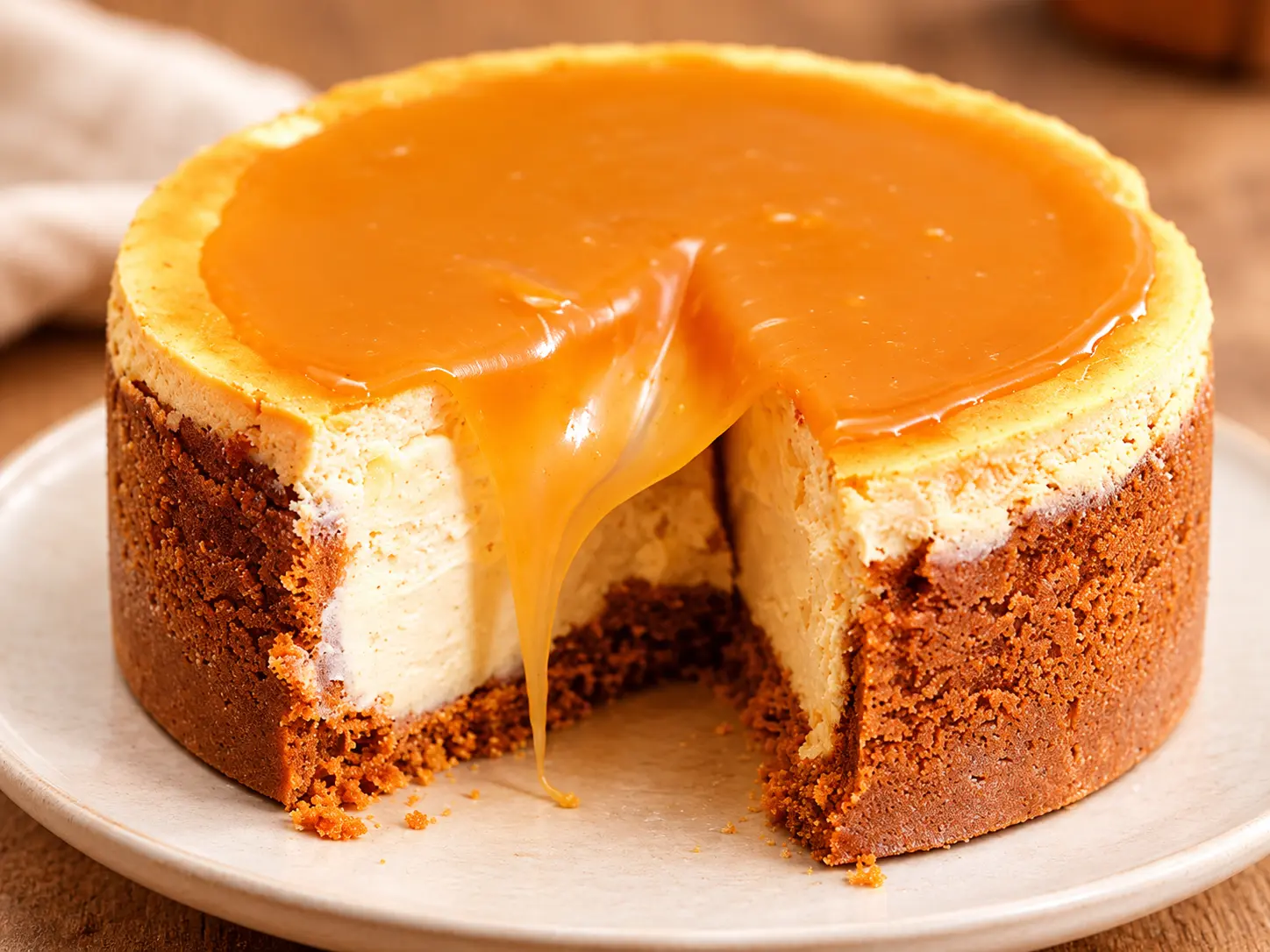
Ingredients
Method
- Simmer cider until 1/2 cup remains; cool and reserve 1/3 cup for filling.
- Mix crust ingredients and press into a 9-inch springform pan. Bake at 350°F for 10 minutes; lower oven to 325°F.
- Beat cream cheese, brown sugar, and cornstarch smooth. Mix in sour cream, cider reduction, spices, vanilla, and salt; gently mix in eggs one by one.
- Pour into crust. Bake in a protected water bath at 325°F for 70–85 minutes, until edges set and center gently jiggles.
- Cool gradually in a switched-off oven for 45 minutes, then on a rack for 45–60 minutes; refrigerate for at least 6 hours.
- Cook apples with butter, sugar, cinnamon and water for 6–8 minutes. Stir in remaining cider reduction and lemon juice; cool.
- Top chilled cheesecake shortly before serving. Store refrigerated.


